The entrepreneur always searches for change, responds to it, and exploit it as an OPPORTUNITY.
- Peter Drucker
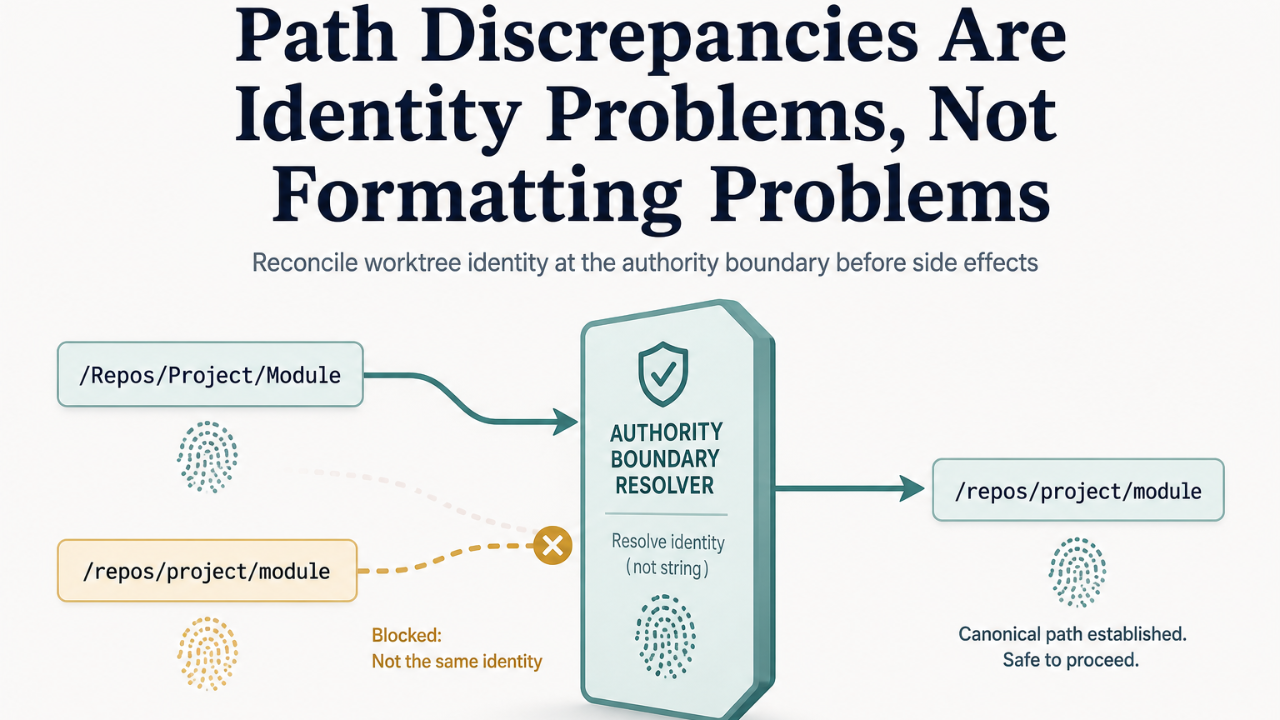
When an operator types a repository path and the system disagrees about spelling, the visible bug looks like a casing or formatting problem. It usually is not. The durable fix is to reconcile Git's registered worktree identity against the filesystem object identity at the shared authority boundary —...
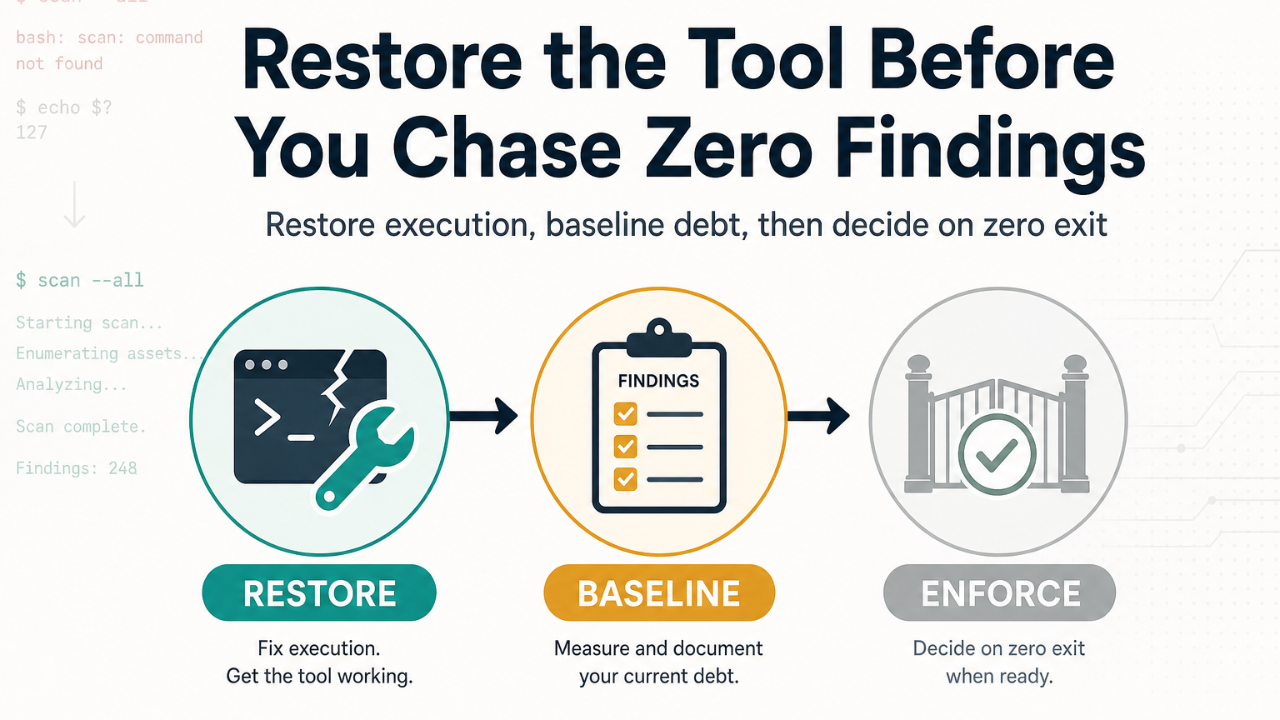
When a framework removes a familiar developer command, the visible failure often looks like a one-line script fix. It rarely is. The real work is usually a small tooling migration with several coupled defects—and a design decision about what "fixed" actually means.
The problem
The symptom was simp...
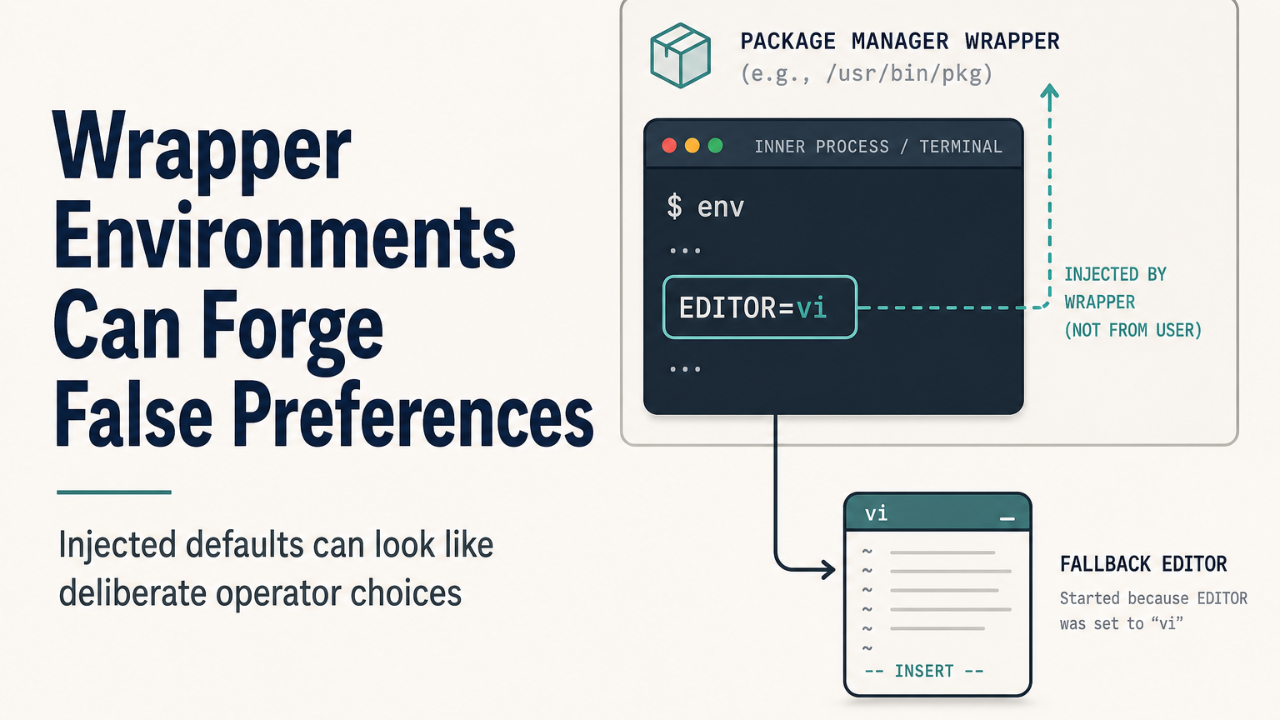
When a package manager or launcher injects environment variables that look like user preferences, your CLI may honour a choice the operator never made. Treat wrapper provenance as part of the product path—and test through the wrapper that broke you.
The problem
The symptom was familiar: an operato...
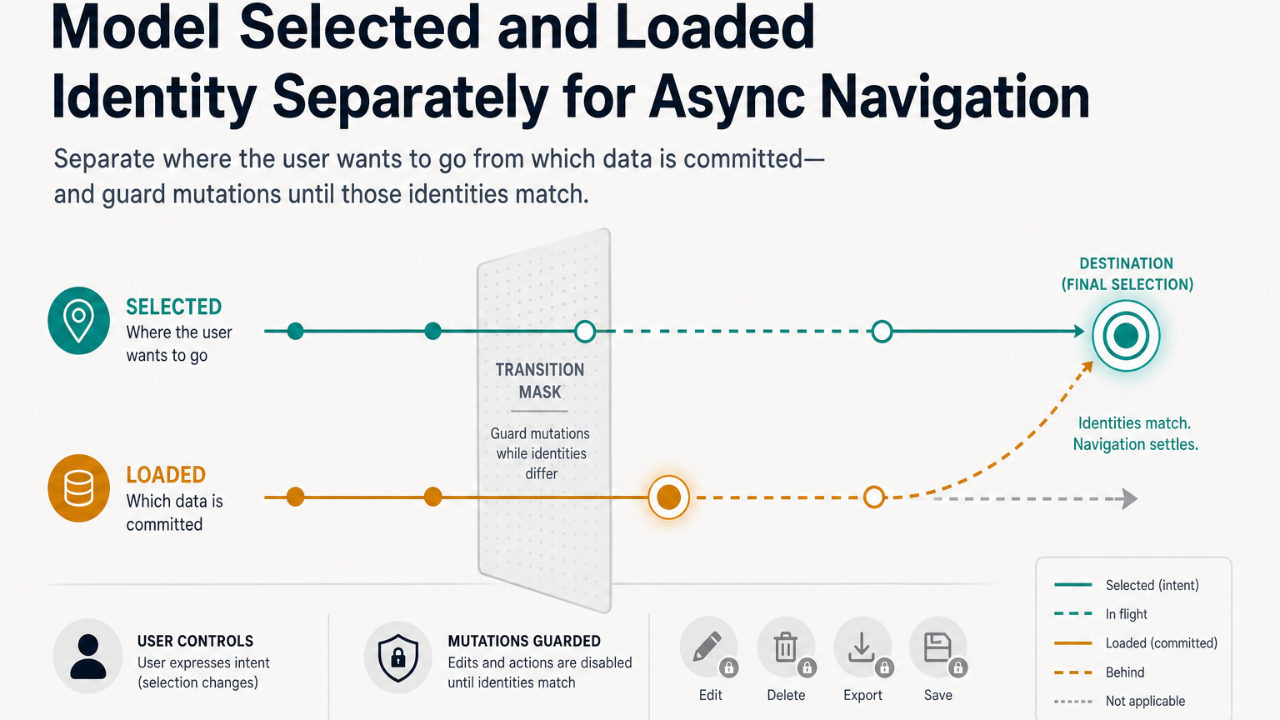
Week-specific columns looked empty while a new period loaded. The instinct was to add a spinner. The real problem was state correctness: the interface could filter old data against a newly selected week, accept obsolete fetch results, and leave stale controls actionable.
The problem
The surface sy...
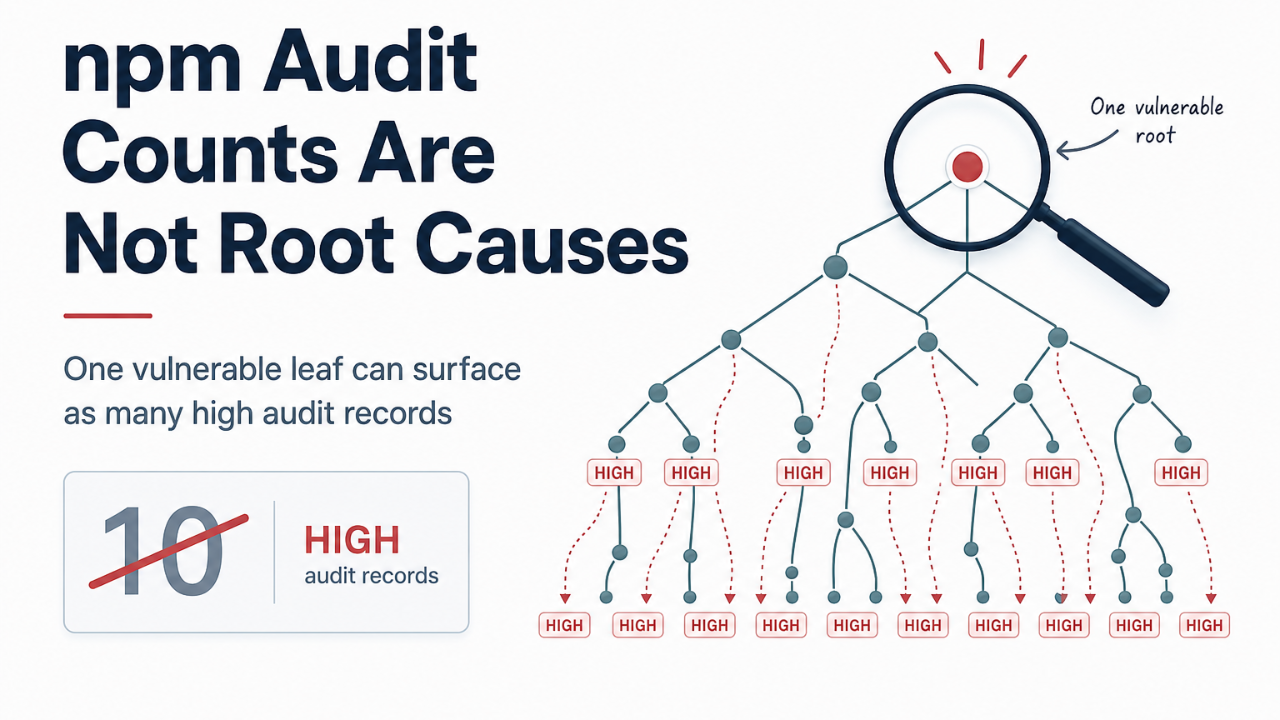
Restoring a clean high-severity dependency gate sounds like a package upgrade. Often the code change is tiny—a lockfile override, a regenerated lock, two files touched. The hard part is proving you fixed the right thing without weakening CI policy, broadening scope, or writing acceptance criteria fo...
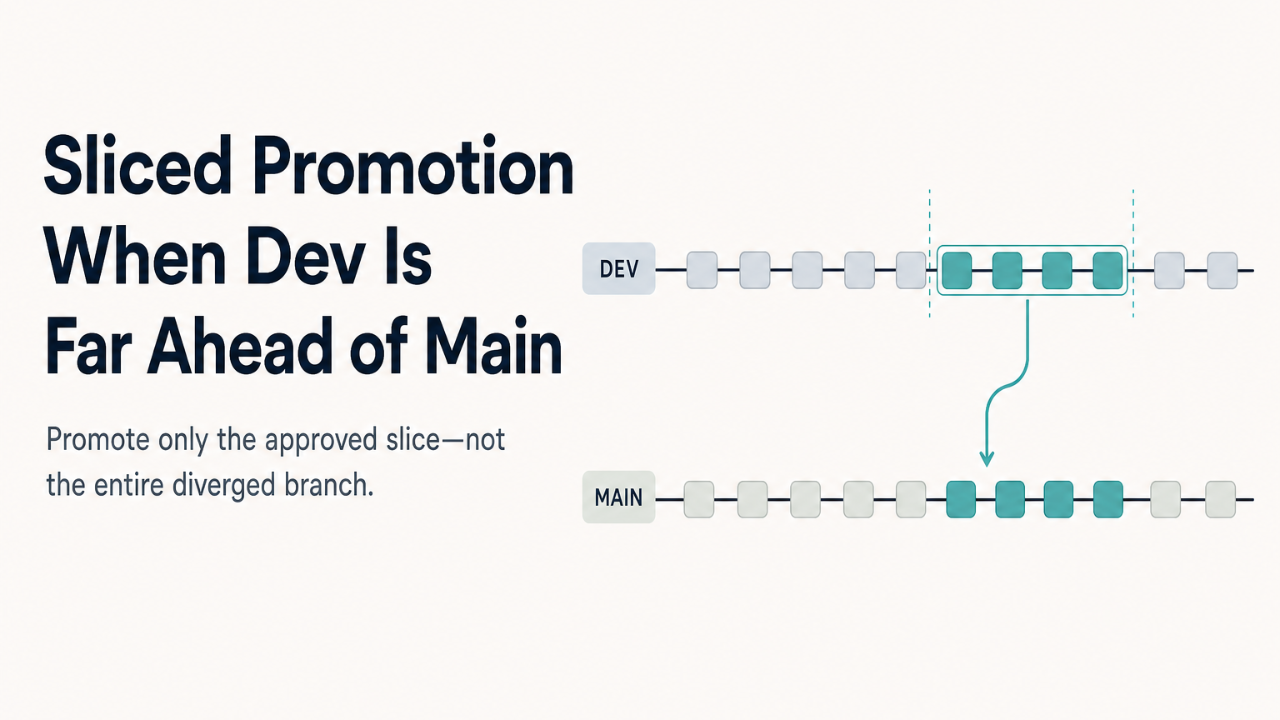
When development has moved far ahead of production, promoting a small, already-accepted change can look straightforward—until you discover that the "normal" route would carry hundreds of unrelated paths with it. The work is small. The risk is accidentally converting a four-file promotion into a full...
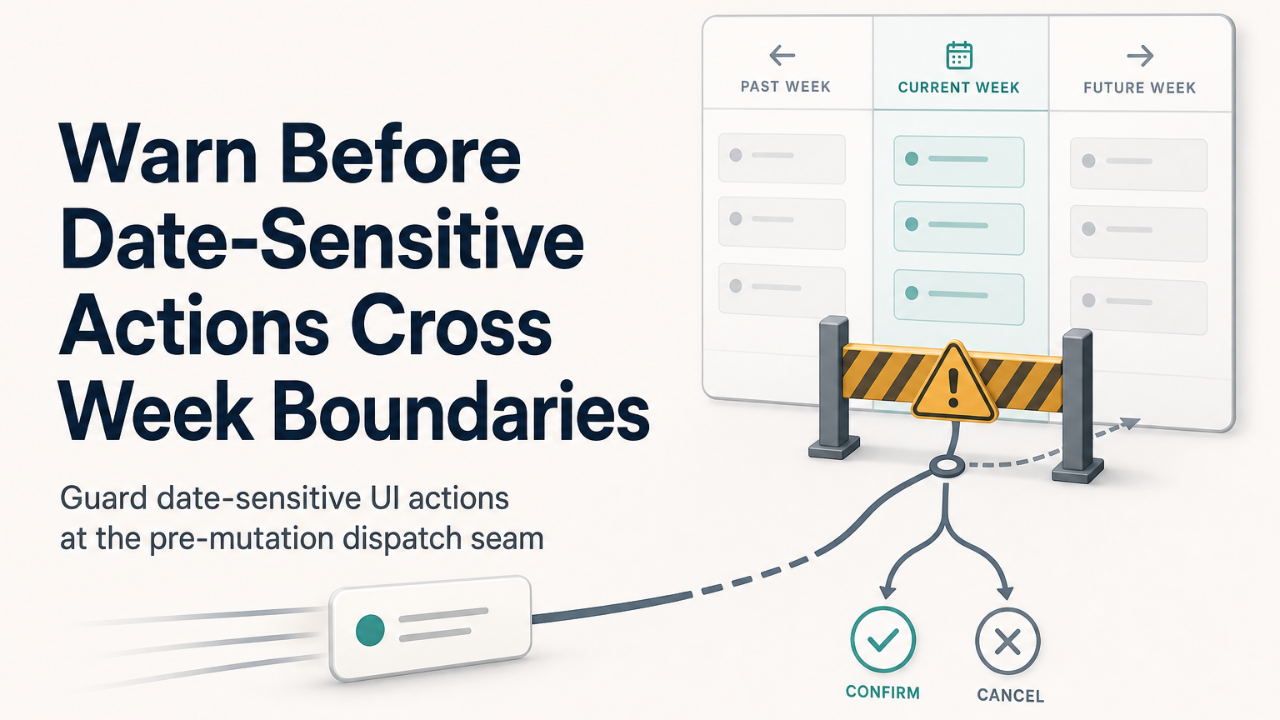
Users can preserve the selected dashboard week and still accidentally move or copy a card into a past or future week without realizing it. The data layer may be correct. The movement logic may work. The gap is UX safety: nothing warns before a date-sensitive action crosses a period boundary the user...
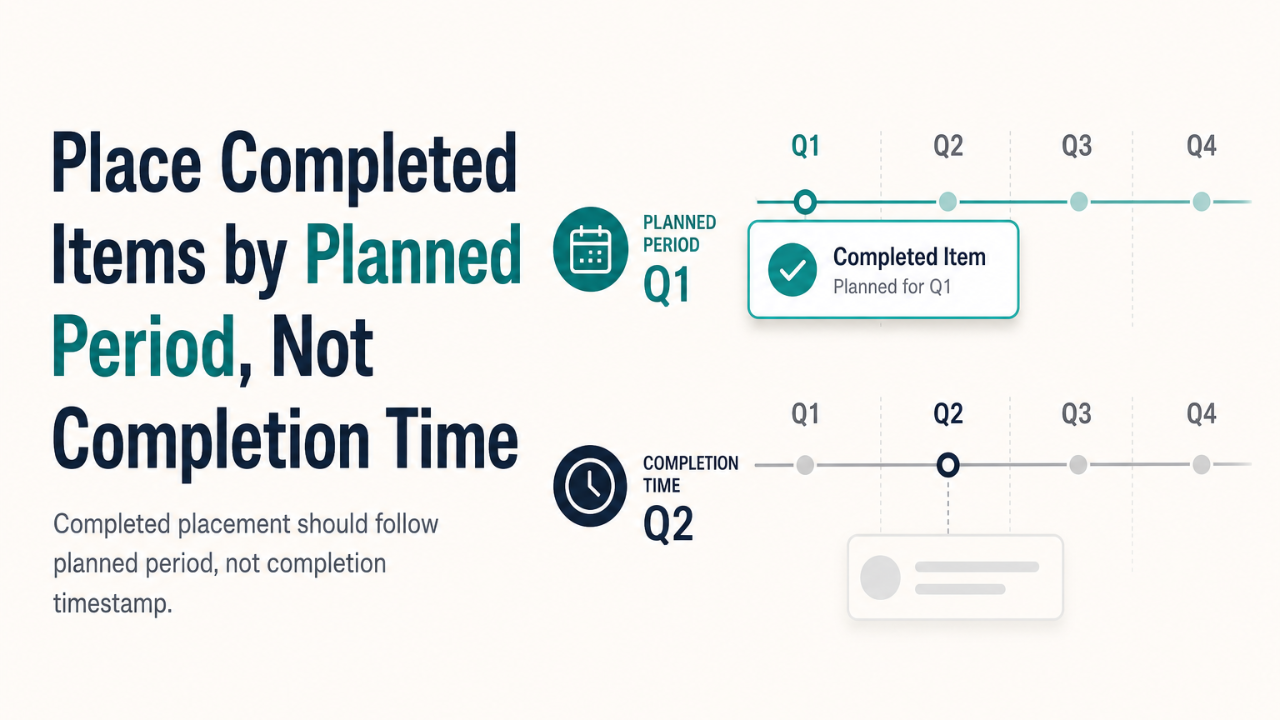
When completed work appears in the wrong quarter or date range, teams often assume the completion flow is broken. More often, the placement logic is sorting by the wrong timestamp. For planning objects, completed placement should follow the object's planned period—not when it was marked done.
The p...
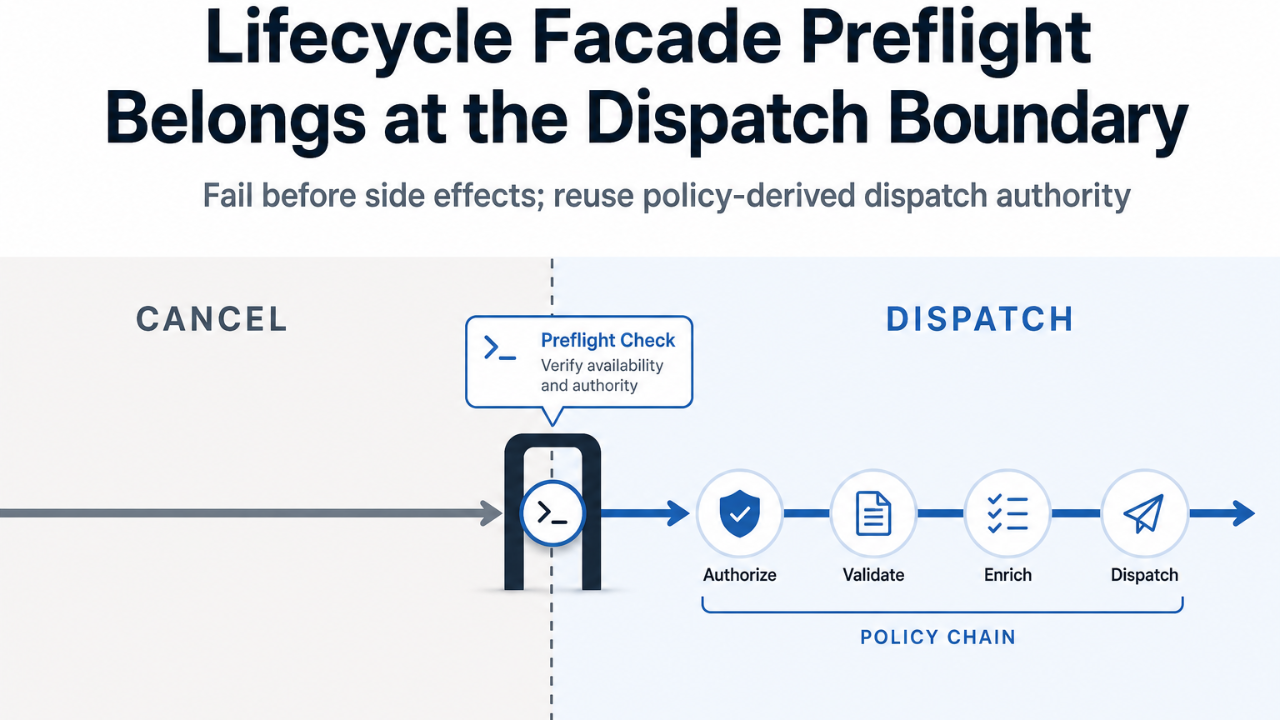
A lifecycle entry command is where operators first touch a governed workflow. When it fails late — after scaffolding work has started, or after a missing worker CLI is only discovered at dispatch — the failure feels like a bug in the tool. It is often a boundary problem.
The fix is not simply "chec...

Some of the smallest-looking changes in a codebase are package-manager changes. Standardize on one package manager, regenerate the lockfile, delete the other one. A few files move. The diff is short. It reads as housekeeping.
It is not housekeeping. A lockfile is a reproducibility contract, and tha...
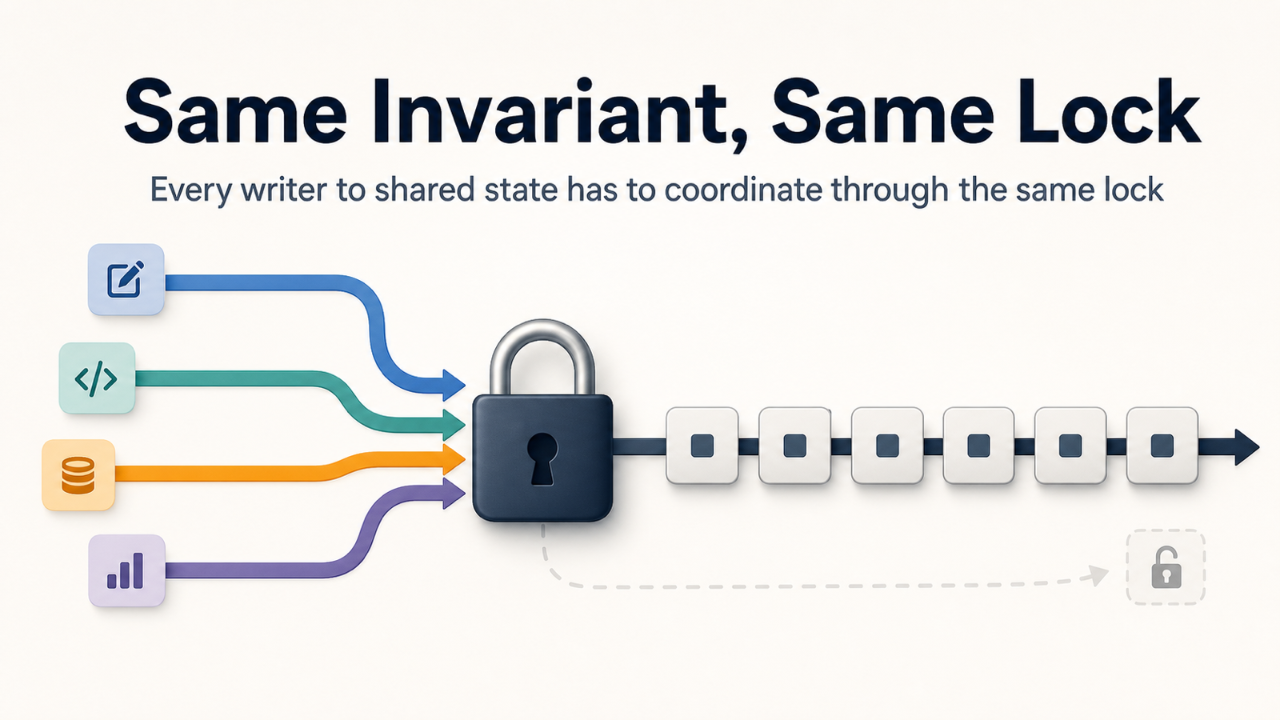
When several different code paths write to the same shared invariant, making one of them safe in isolation does almost nothing. The invariant is only as protected as its least careful writer — and "atomic" means very little if each writer is atomic in its own separate way.
The problem
We had a sha...

A long-running automated workflow that goes silent looks identical to one that has hung. The fix sounds trivial — "show more progress" — but the interesting decisions are about where the liveness signal lives, how honest it is, and whether your test actually exercises the path a real user hits.
