The entrepreneur always searches for change, responds to it, and exploit it as an OPPORTUNITY.
- Peter Drucker
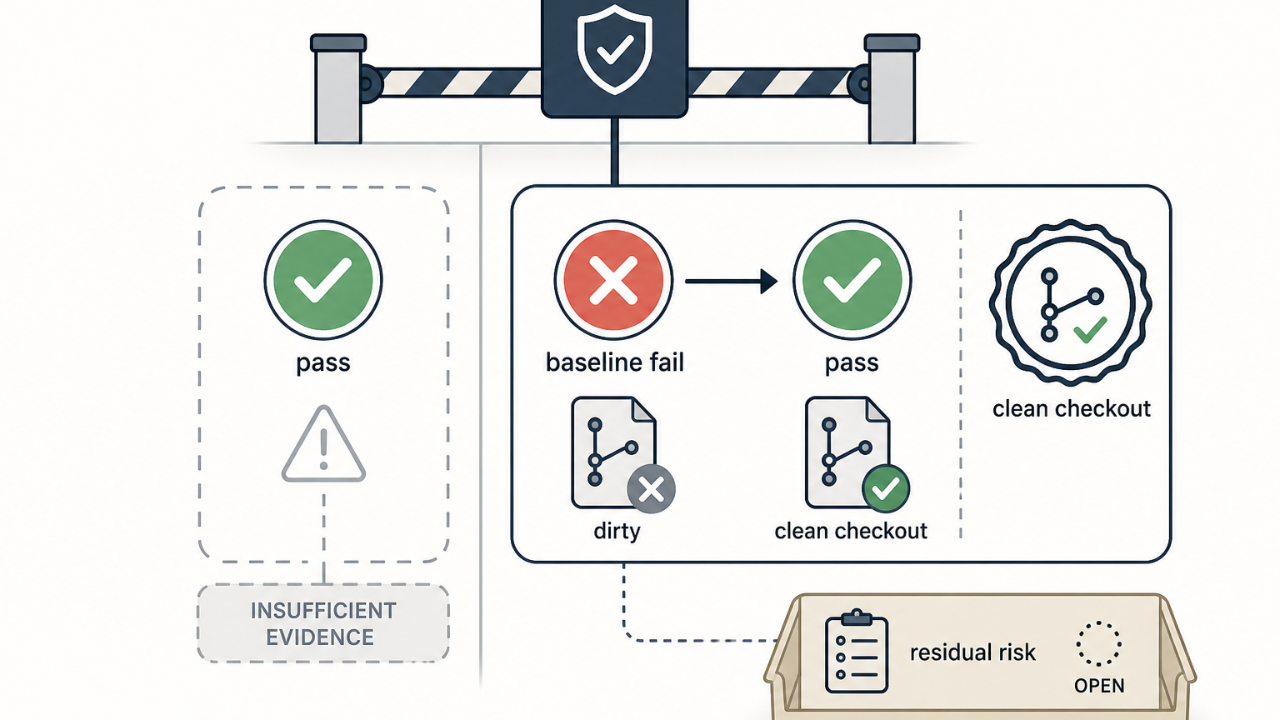
A control that has only ever returned green has not yet proven it can catch what it claims to catch. Passing results are necessary. They are not sufficient. The missing half is executable negative evidence: a mechanism that fails against the real unfixed baseline, runs on the content you claim to ha...
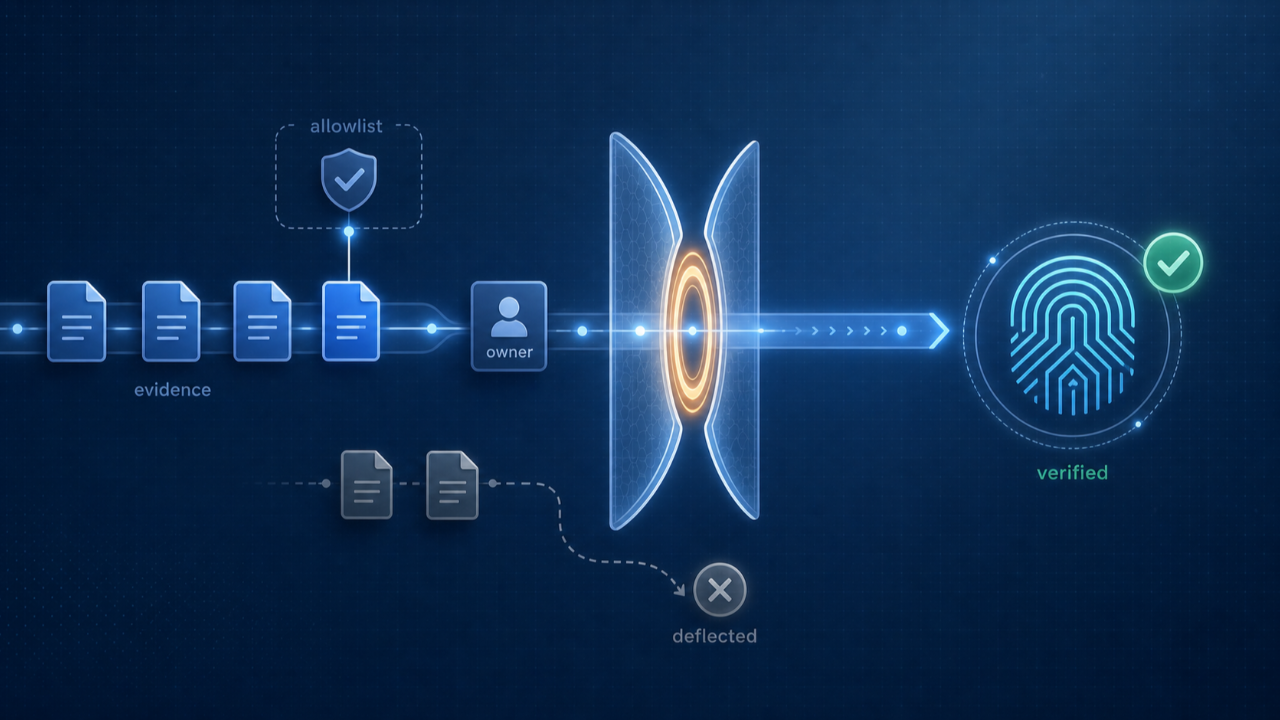
When a system's own audit output was mistakenly treated as a source-code change, every audit run invalidated itself the moment it completed. The fix wasn't excluding a folder — it was building a principled boundary between the thing being verified and the evidence describing it.
The problem
Any sy...

When a team allows work to be revised and reworked — a document, a plan, a piece of code — there is an easy trap: assuming that "prevent stale overwrites" is a small file-comparison problem. It isn't. It's a lifecycle-contract problem, and treating it as anything smaller tends to produce a fix that ...
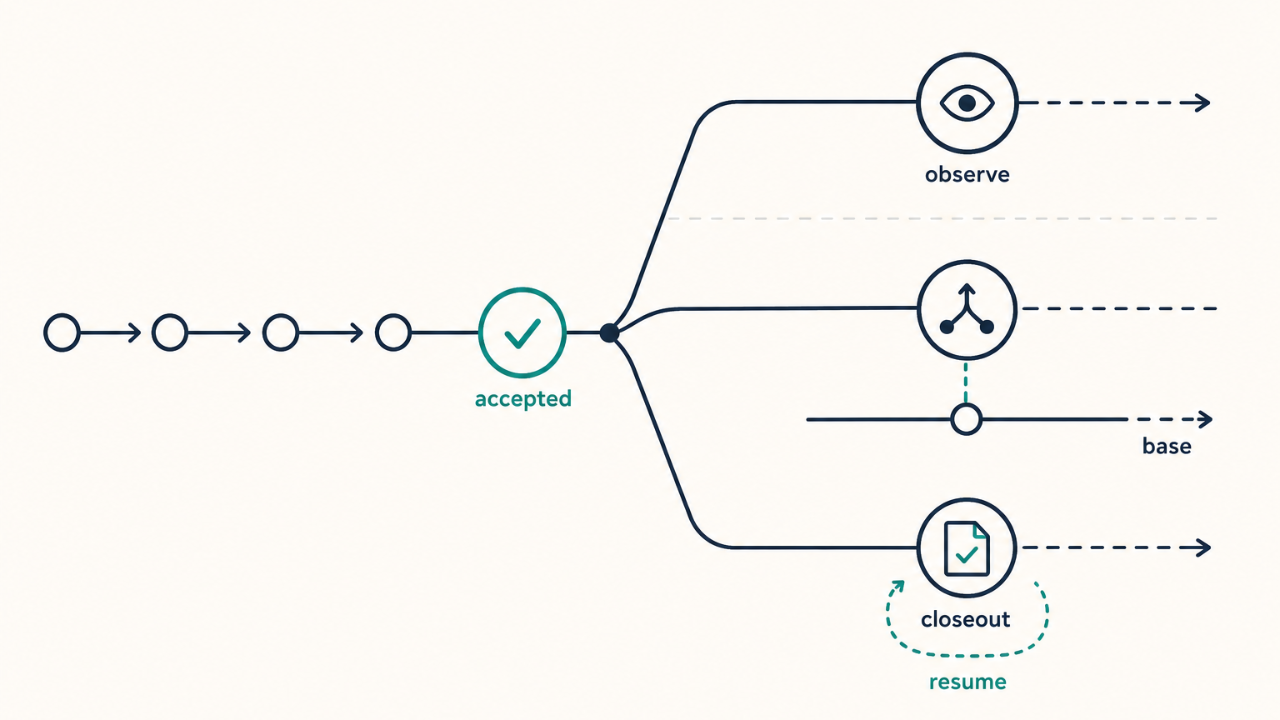
Many release pipelines automate everything up to the moment a human says "yes," then quietly hand the rest back to a person. Closing that last gap looks like a small scripting task. It usually isn't. The hard part after human acceptance isn't running one more command — it's deciding who is allowed t...
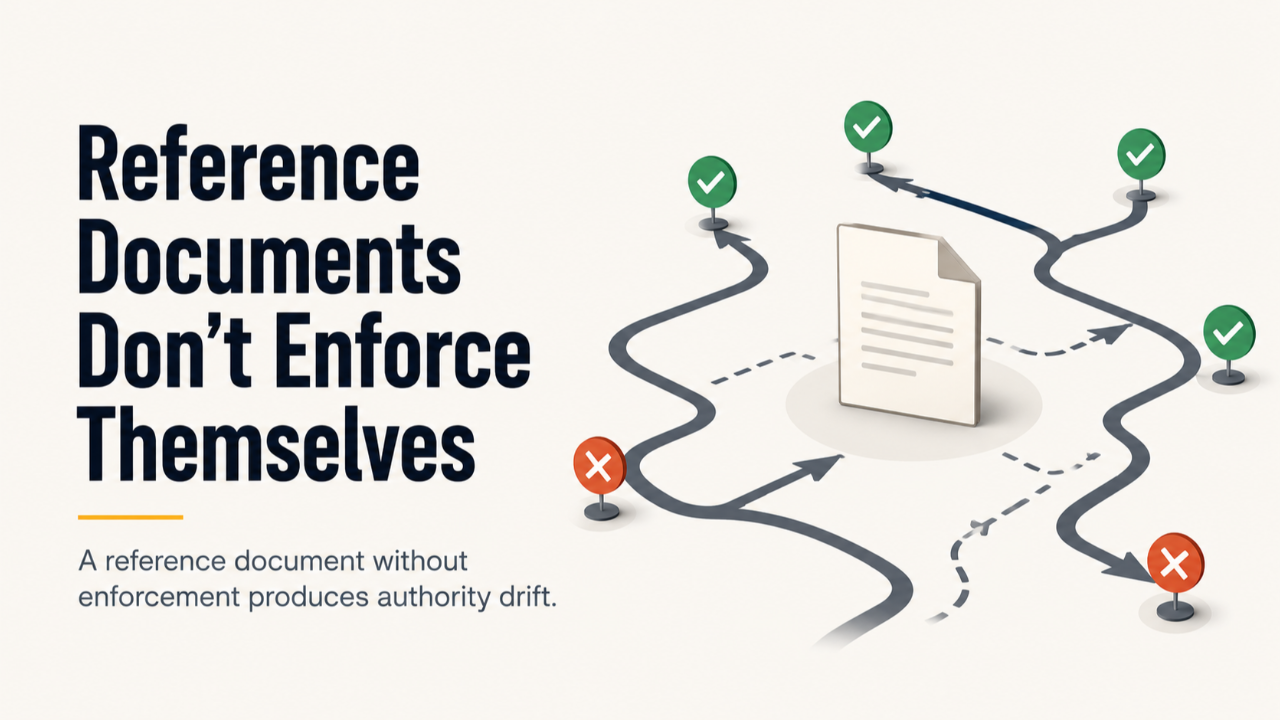
A reference document that exists but isn't operationally enforced produces a predictable outcome: documentation authority drift. Workers make decisions from code inspection, memory, or reasonable assumptions — and the guidance you wrote gets ignored. This is not a failure of documentation quality. I...
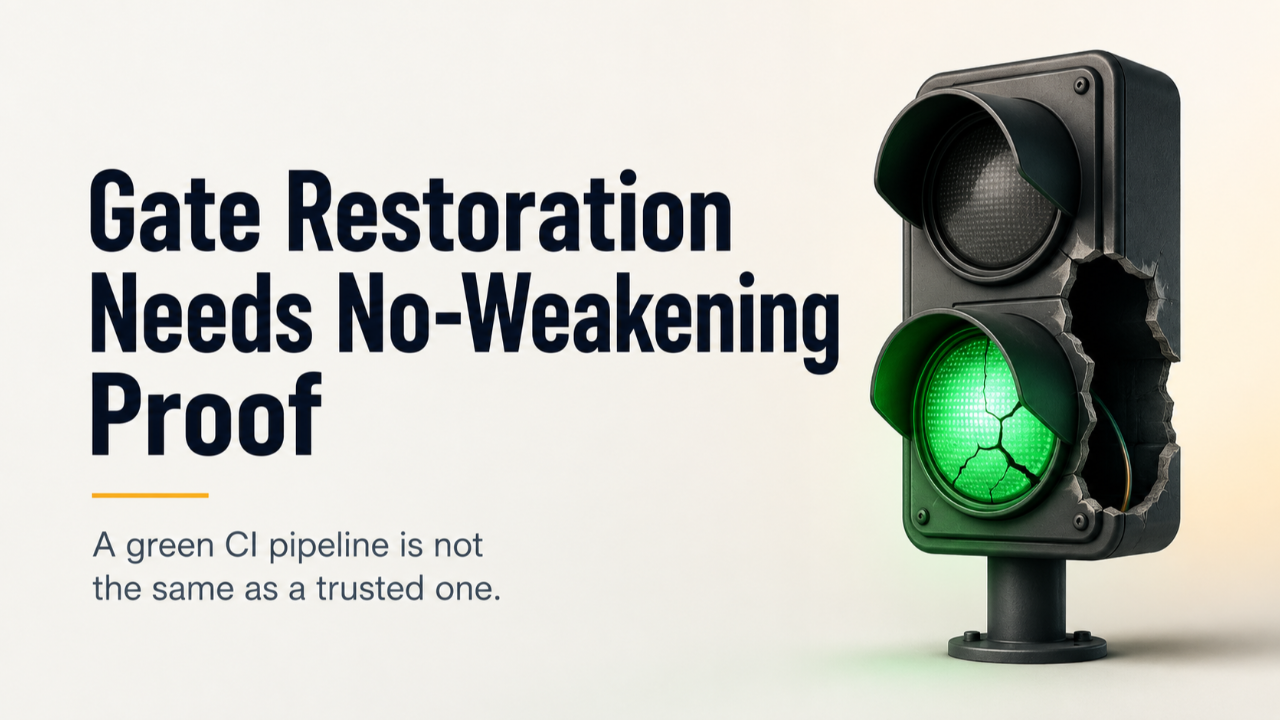
When CI quality gates fail, the instinctive fix is to make the checks go green. But a fix that silently weakens the gate — by skipping tests, adding suppression comments, or narrowing the scope of what gets checked — is not a fix. It is a regression dressed as a resolution.
Gate restoration is a tr...
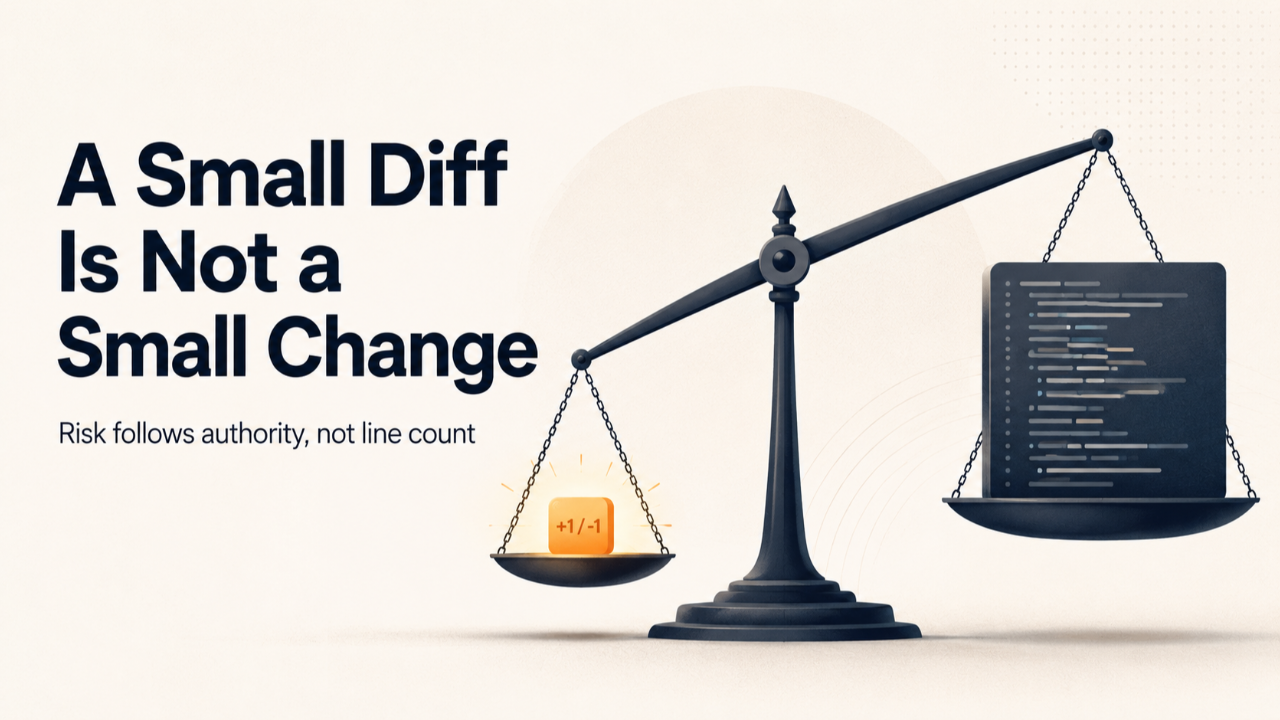
Most teams size their caution by the size of the change. A one-file edit gets a quick look; a thousand-line feature gets the careful review. That instinct is usually right, and occasionally dangerous. The amount of risk in a change is set by the authority it touches, not by how many lines it edits.
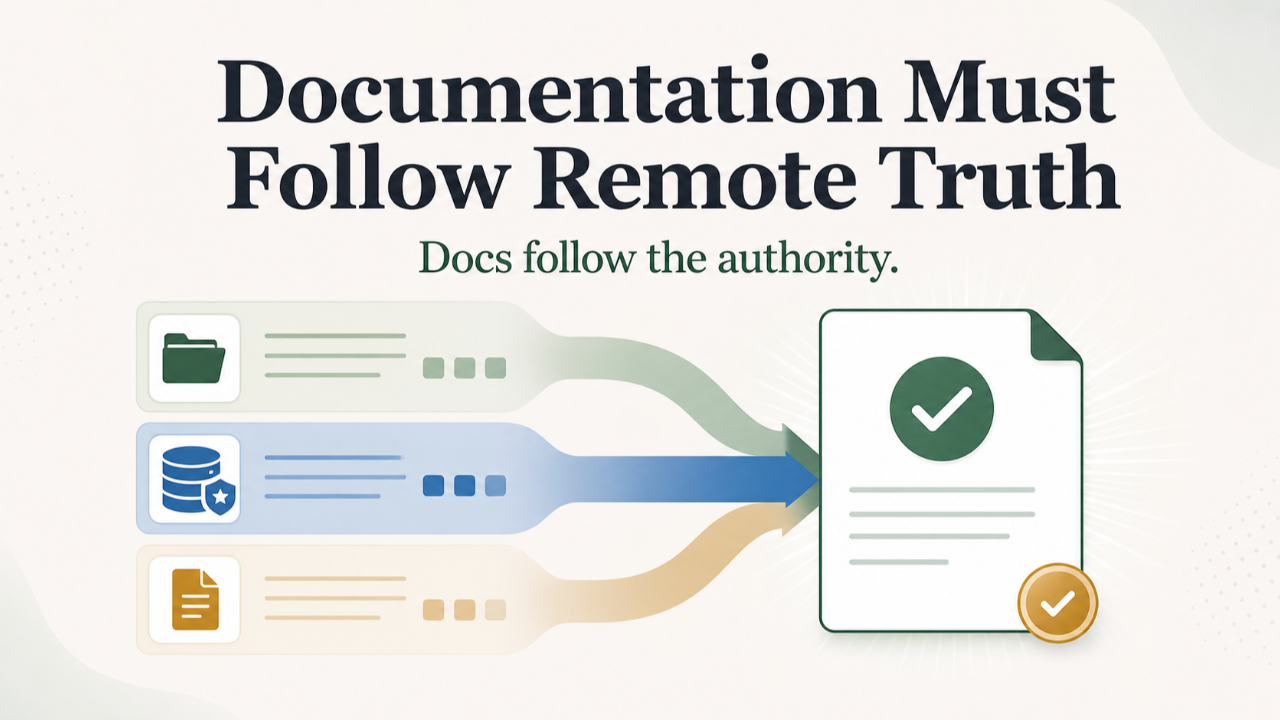
...
Some of the riskiest work looks like housekeeping.
A README needs cleanup. A migration table needs updating. A status note is out of date. The final diff may only touch documentation, so the task feels safe.
But if the document describes a live system, the documentation is not the authority. It is...
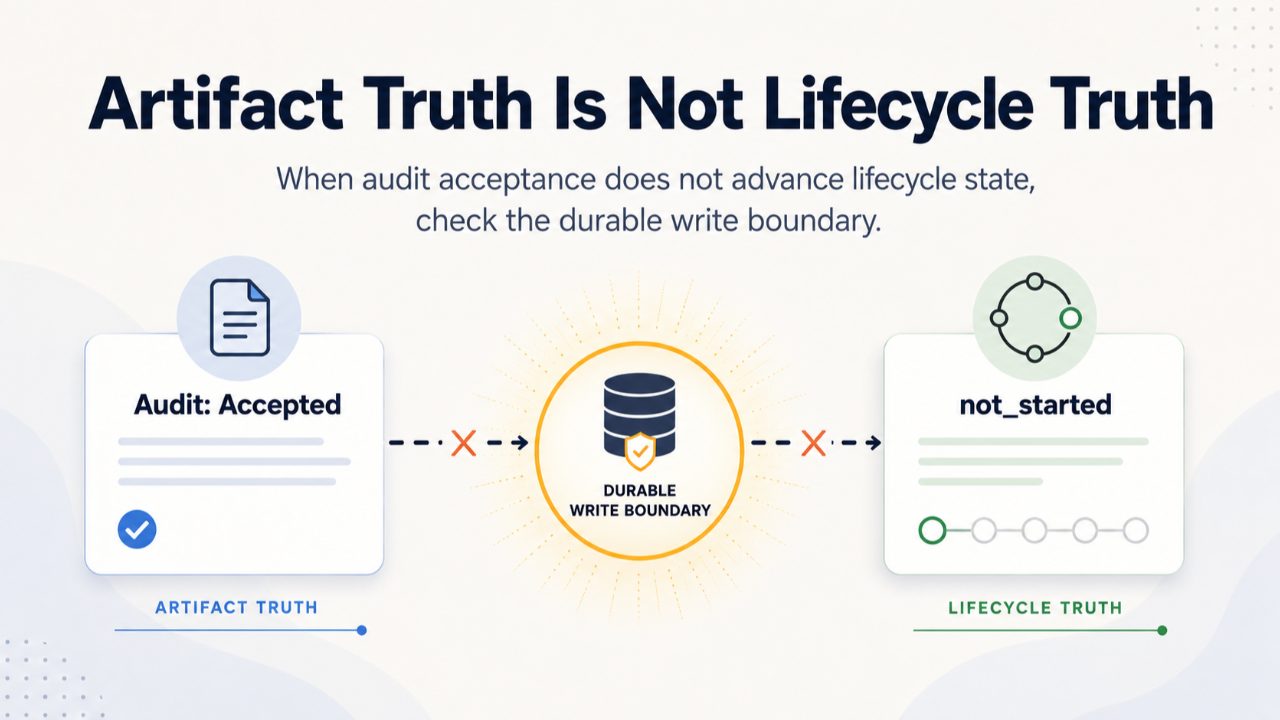
When an audit artifact says accepted but durable lifecycle state does not advance, the defect is usually a missing state write—not a routing failure. Treat artifact contents and durable lifecycle records as separate sources of truth, and prove the boundary writes the correct machine-readable state.
...