The entrepreneur always searches for change, responds to it, and exploit it as an OPPORTUNITY.
- Peter Drucker
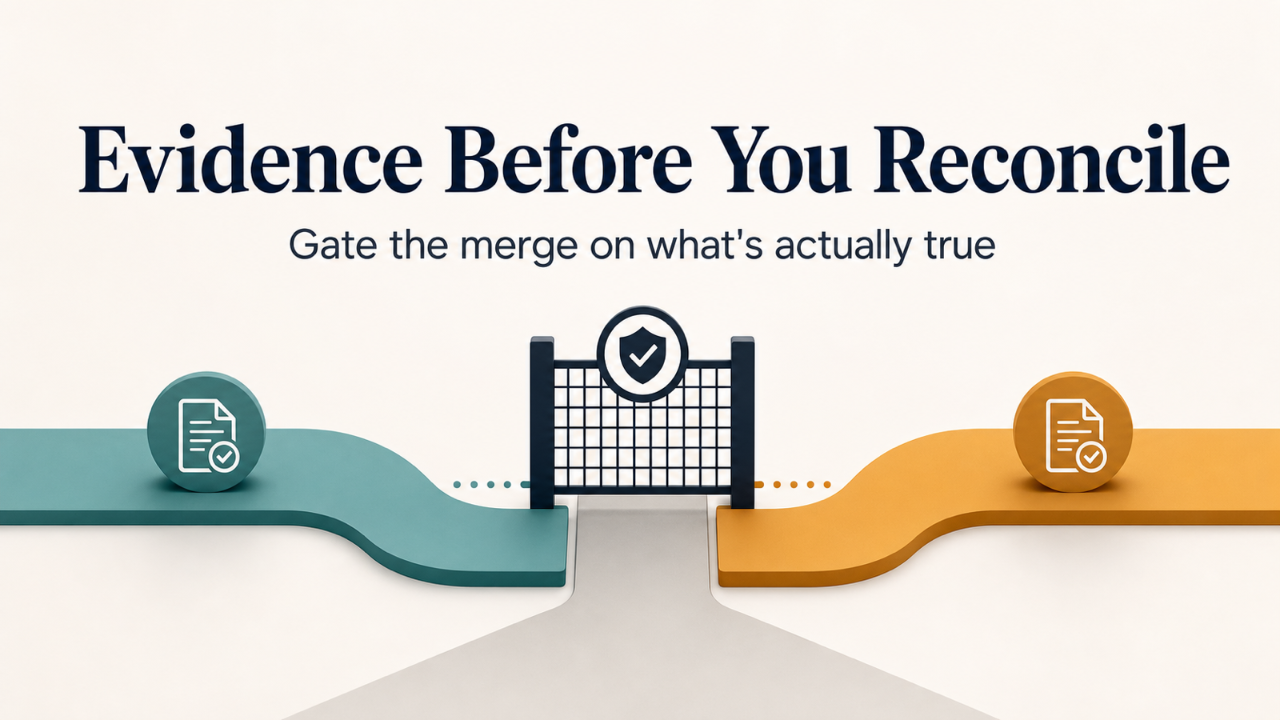
When two versions of a system have drifted far apart, the request usually arrives as one line: "reconcile these two branches." It sounds like a merge. It almost never is. The real first question is not how do we combine these? but do we yet know enough to combine them safely? Most of the time, the h...
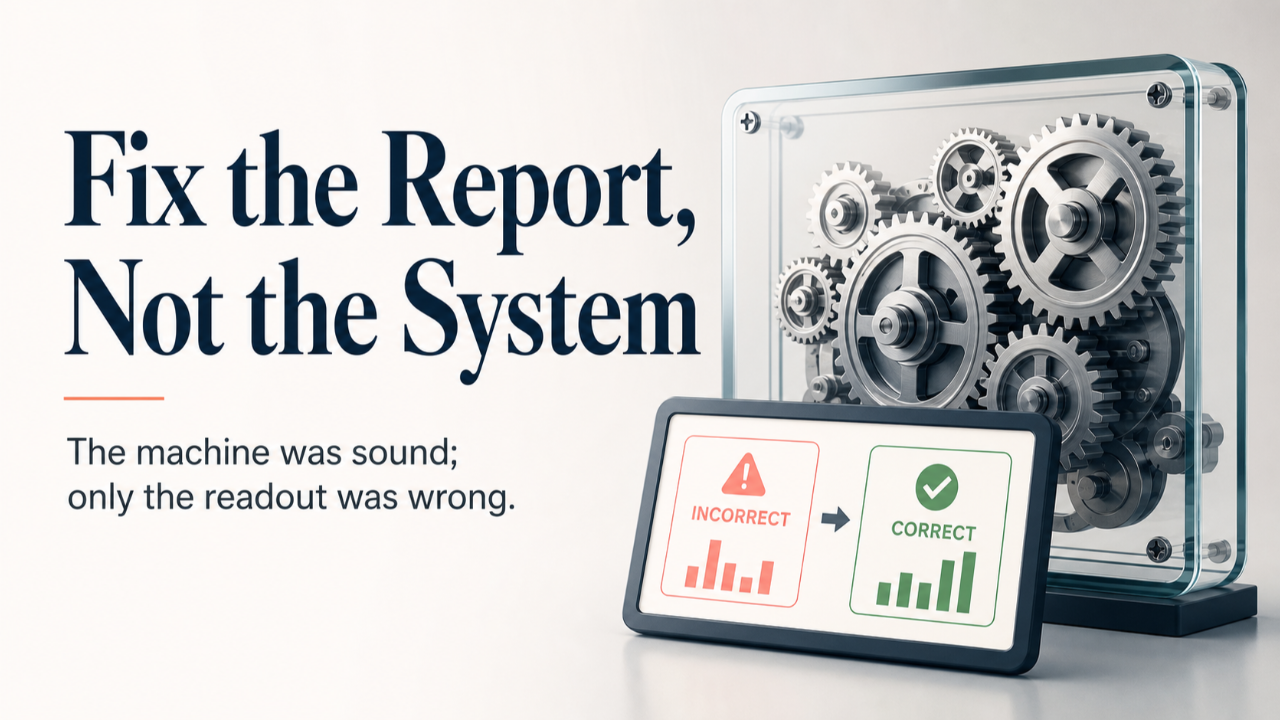
When an operational command feels broken, the safe fix usually improves what it reports and how it behaves — not the validation or the state machine underneath it.
The problem
A command that operators run early in a governed workflow felt broken. The complaints were real, but they were about exper...
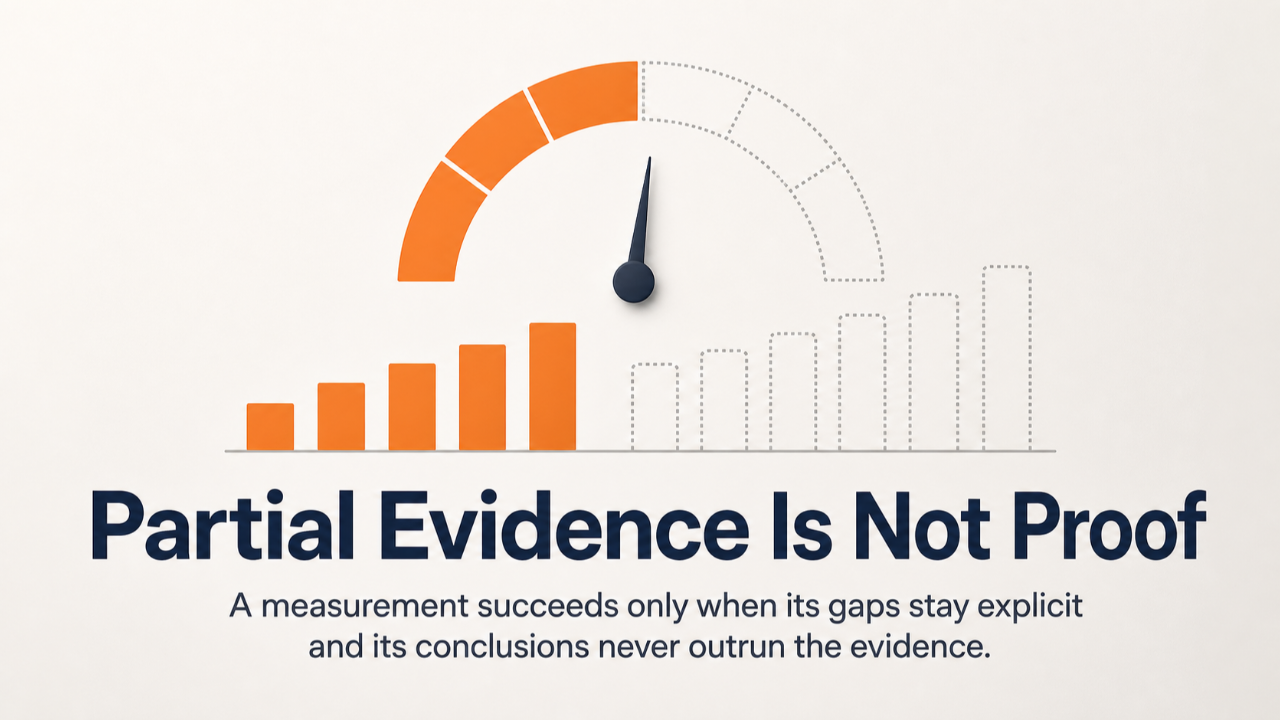
After two structural fixes had landed, the honest answer to "is this fast enough now?" was still: we don't actually know. The fixes looked right. Nothing obviously misbehaved. But "it feels better" is a feeling, not a finding. The next piece of work wasn't another fix — it was figuring out whether a...

Replacing one component with a newer one looks like a refactor. When that component renders on a public or shared route, it is something else: a safety contract. The lesson from one of these migrations is simple to state and easy to get wrong — read-only has to be built and enforced, not inferred fr...
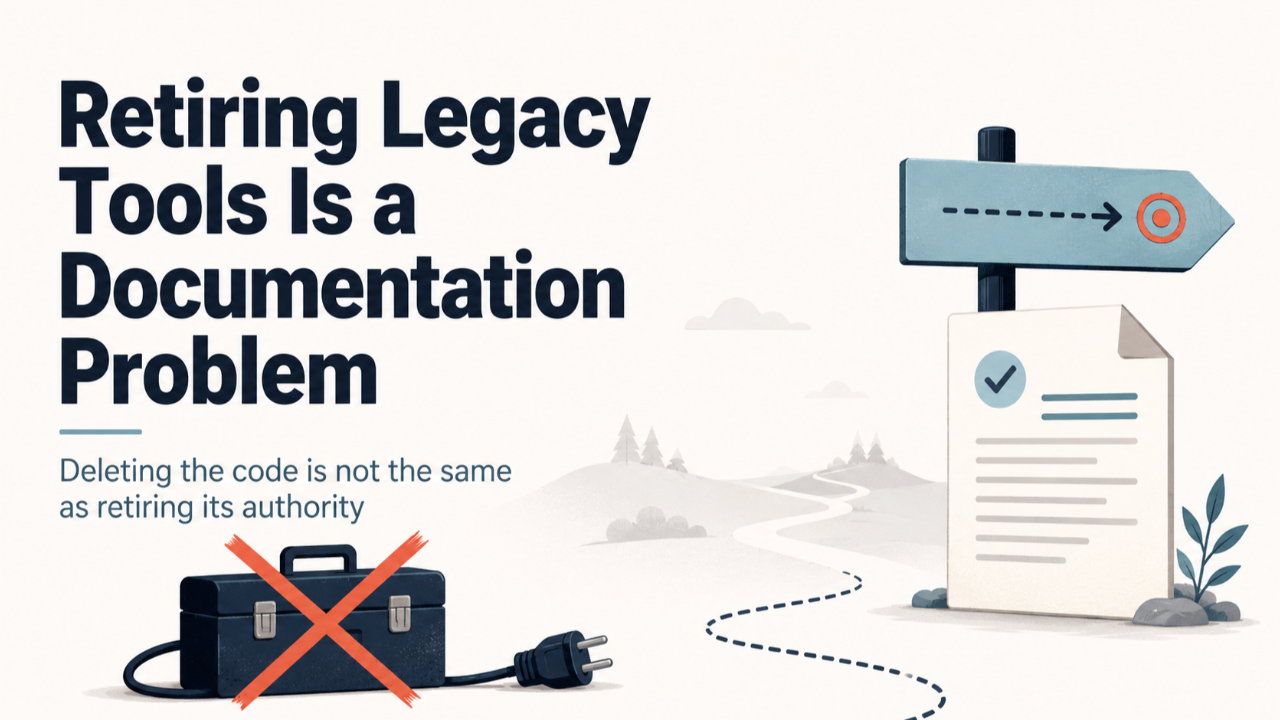
Deleting an obsolete script is a small change. Retiring the authority it carried is not. The hard part isn't removing the code — it's proving the old path is no longer live and removing the documentation that still tells people to use it.
The problem
Most teams accumulate alternate ways of doing t...
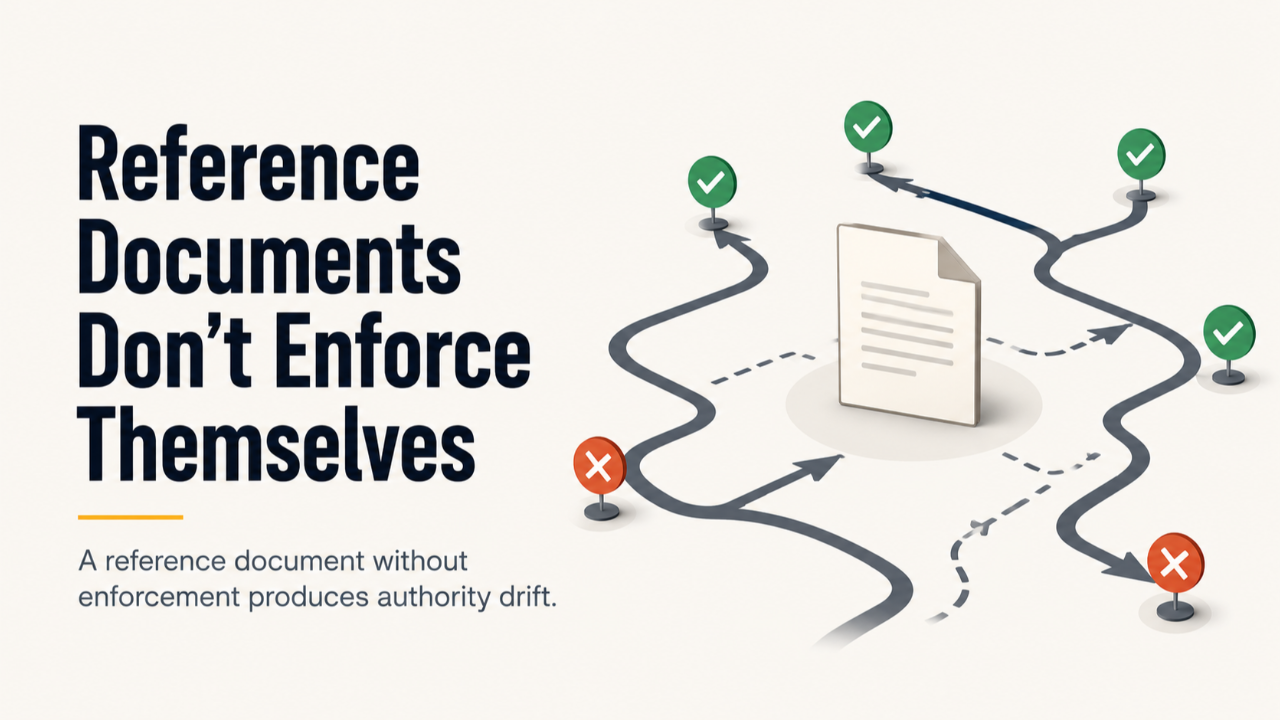
A reference document that exists but isn't operationally enforced produces a predictable outcome: documentation authority drift. Workers make decisions from code inspection, memory, or reasonable assumptions — and the guidance you wrote gets ignored. This is not a failure of documentation quality. I...
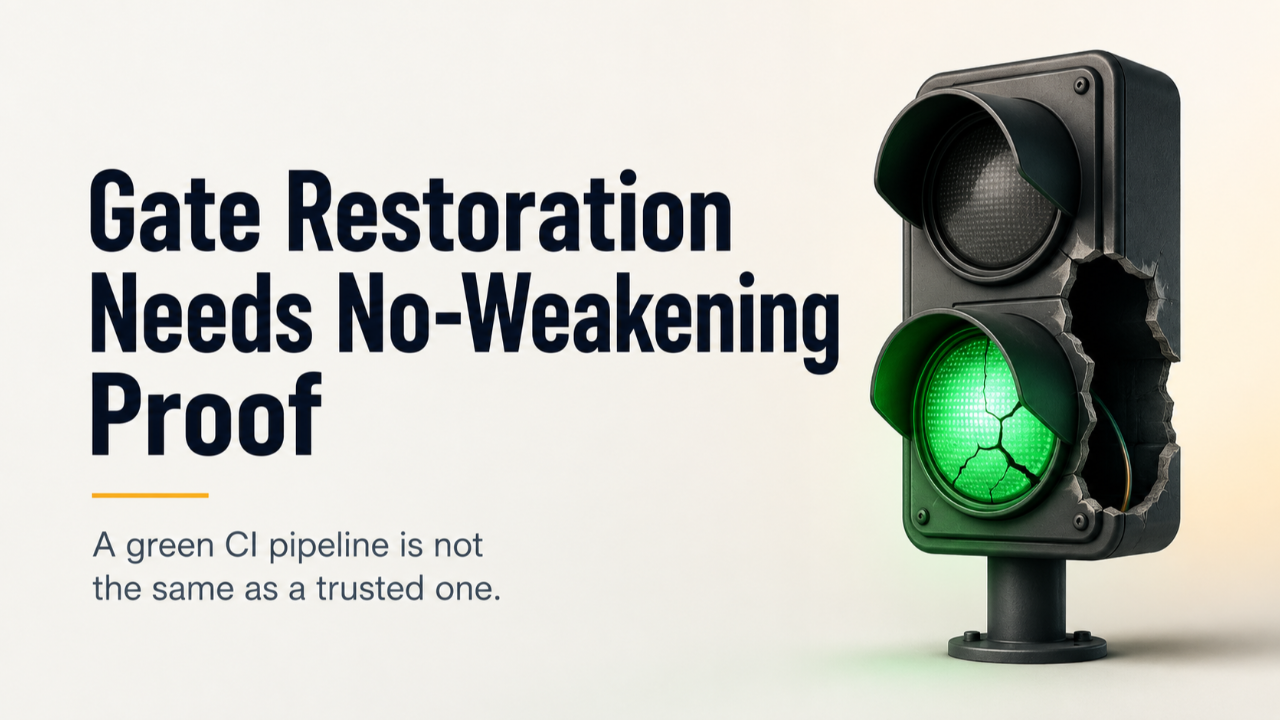
When CI quality gates fail, the instinctive fix is to make the checks go green. But a fix that silently weakens the gate — by skipping tests, adding suppression comments, or narrowing the scope of what gets checked — is not a fix. It is a regression dressed as a resolution.
Gate restoration is a tr...
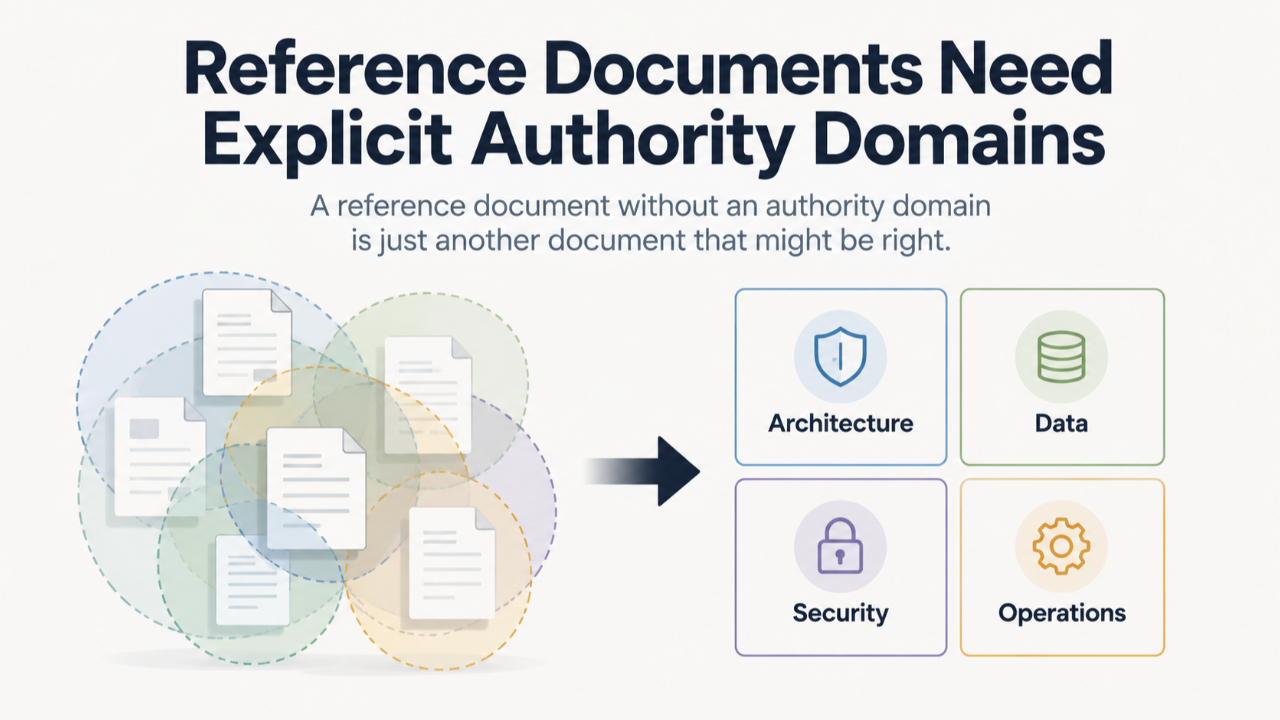
A new reference document does not displace existing ones unless you assign authority explicitly. The governance work is domain ownership and conflict-routing rules — not the document itself.
The problem
Repositories and operations guides accumulate reference documents over time. A coding guide her...
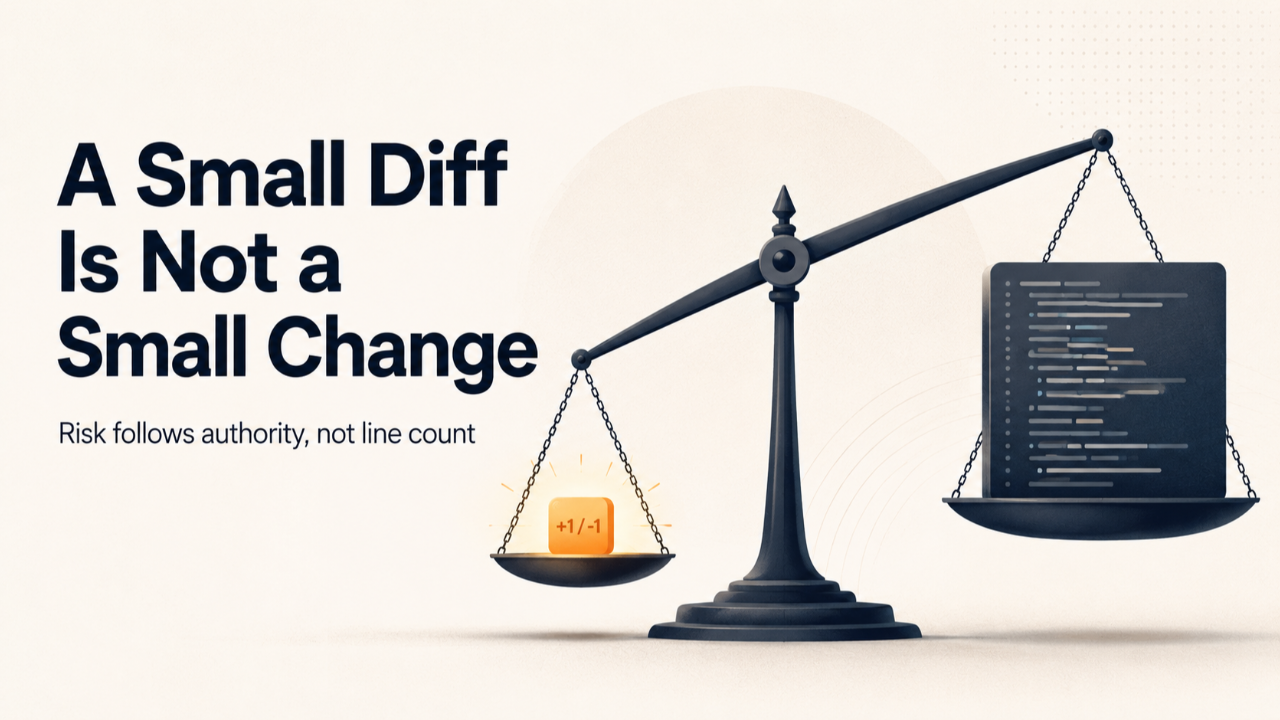
Most teams size their caution by the size of the change. A one-file edit gets a quick look; a thousand-line feature gets the careful review. That instinct is usually right, and occasionally dangerous. The amount of risk in a change is set by the authority it touches, not by how many lines it edits.
...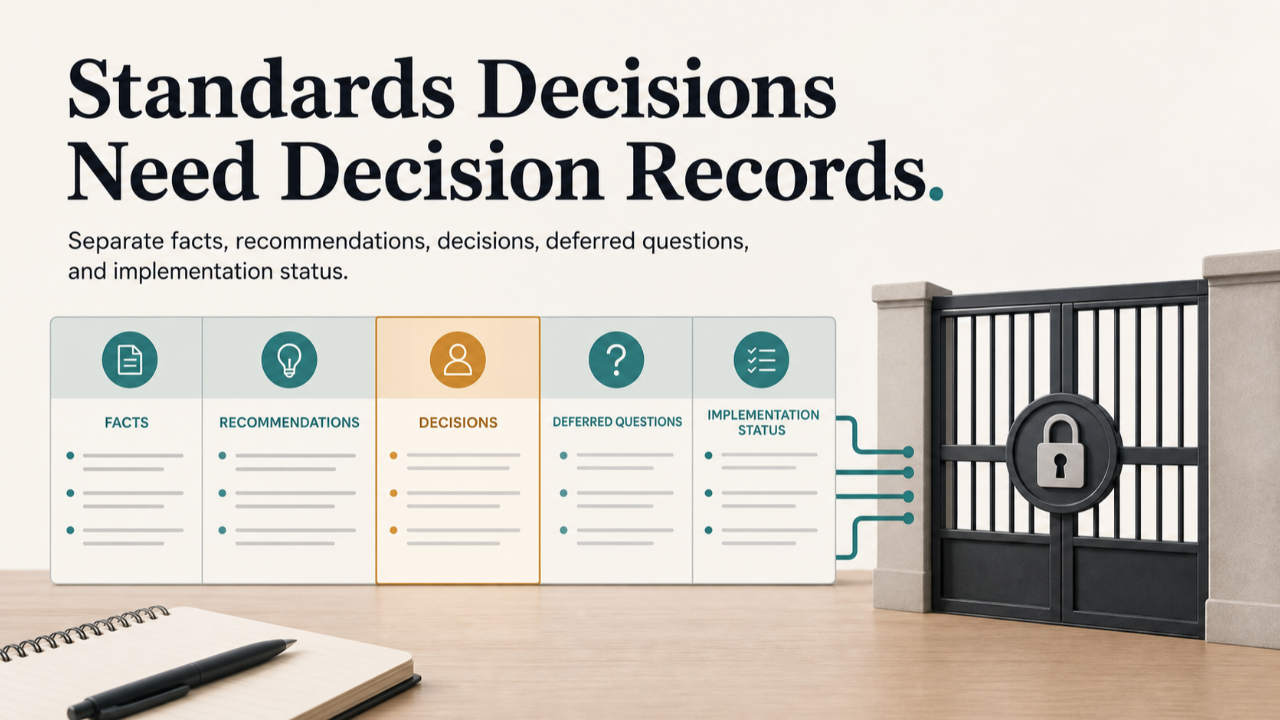
Engineering standards work can look like documentation, but it often carries policy weight. If a team records standards without separating evidence, recommendations, decisions, and implementation status, the document can accidentally turn drift into authority.
The problem
Teams often discover stan...
Opening
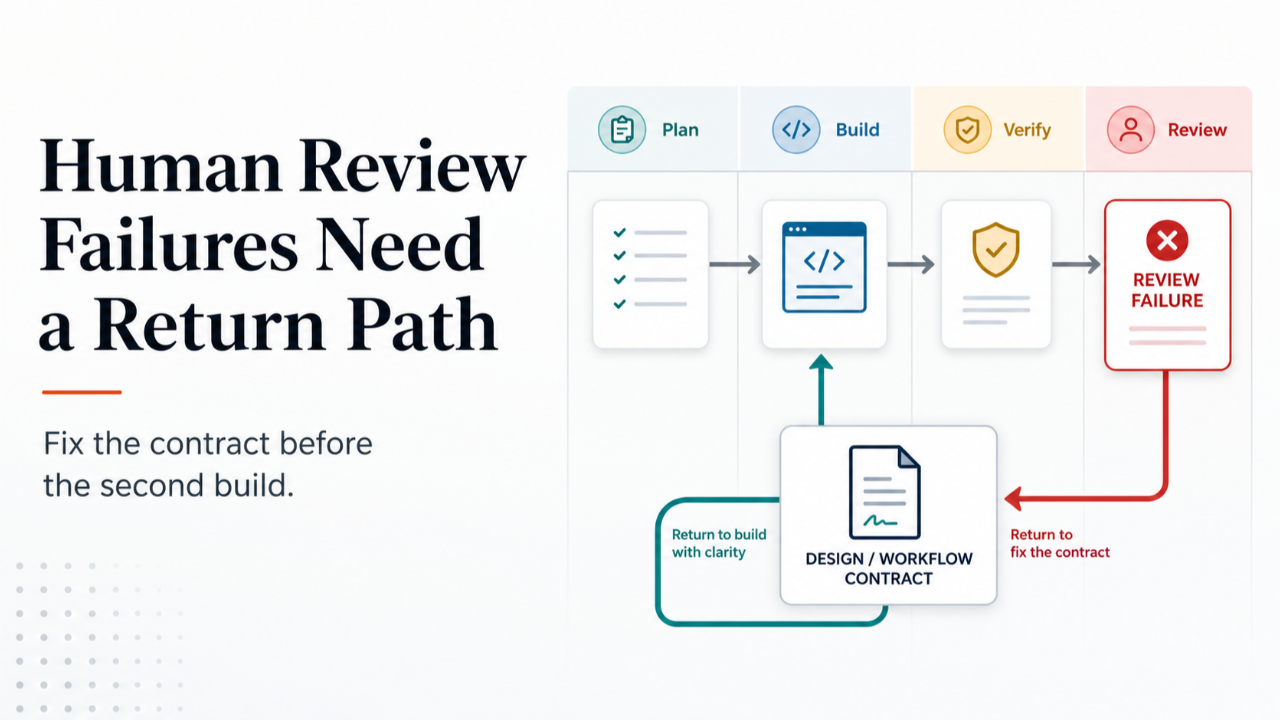
A small UI change can look finished in code and still fail in review.
The button moved. The dialog still opens. The old menu entry is gone. The tests pass far enough to show the behavior is wired.
Then someone looks at the actual screen and says: this does not feel consistent.
That is no...
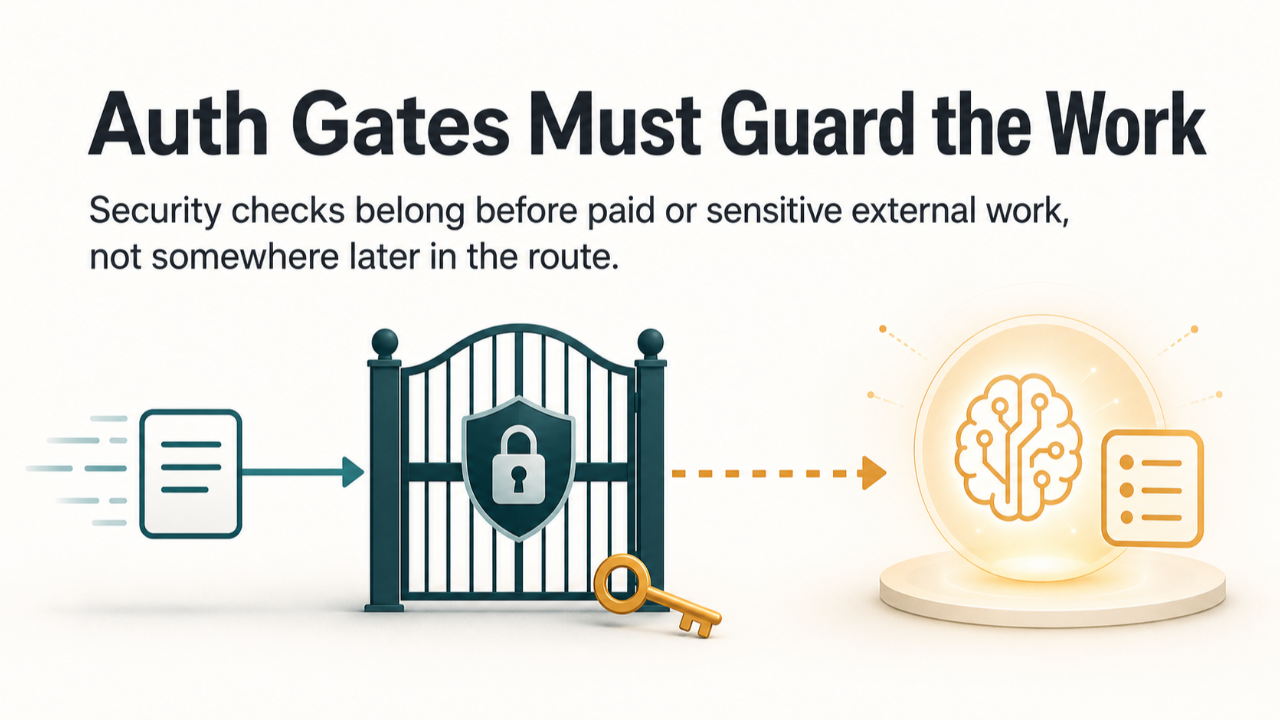
Security checks are not enough if protected work can start before they run. Routes that call paid or sensitive external services need authorization before key reads, request processing, external calls, and mutations.
The surface problem
The simple version of the problem sounds familiar: add authen...
