The entrepreneur always searches for change, responds to it, and exploit it as an OPPORTUNITY.
- Peter Drucker
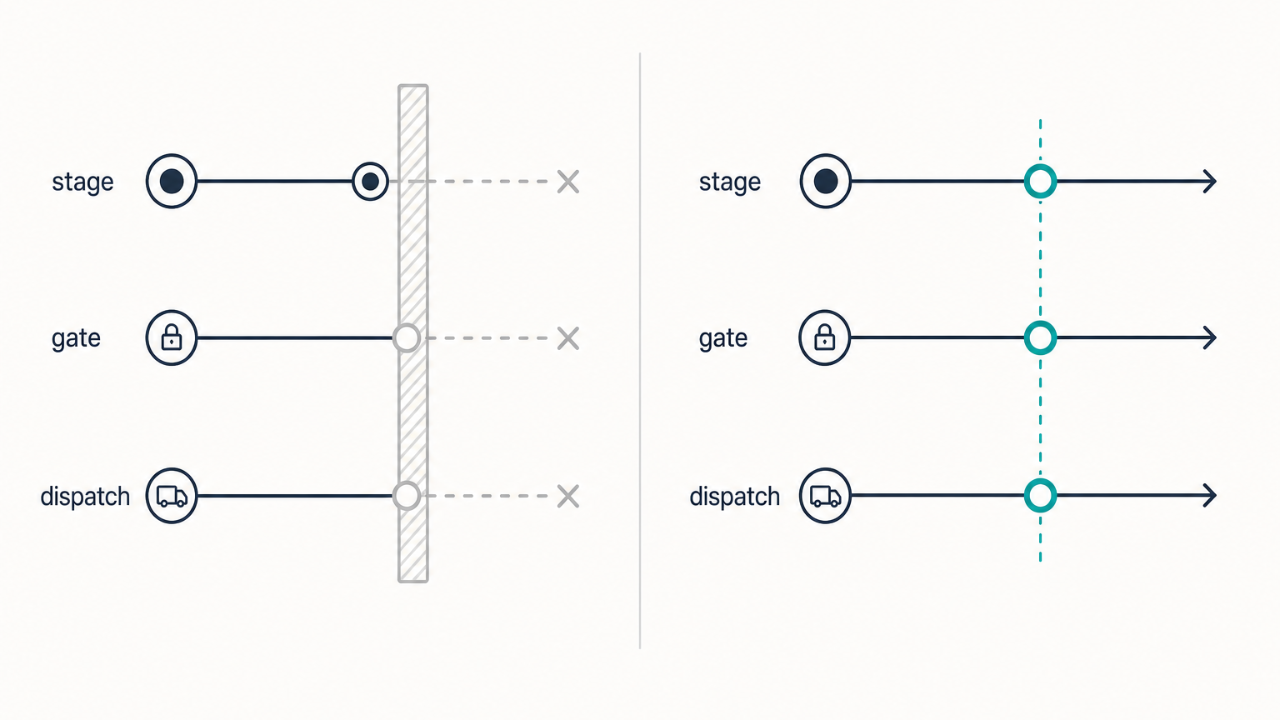
A governed workflow can block premature execution and still record a lie. When durable state says you have reached the next stage while a human gate is still pending, dispatch protection alone is not enough. The fix is to align three truths: the recorded lifecycle stage, the gate status, and who is ...
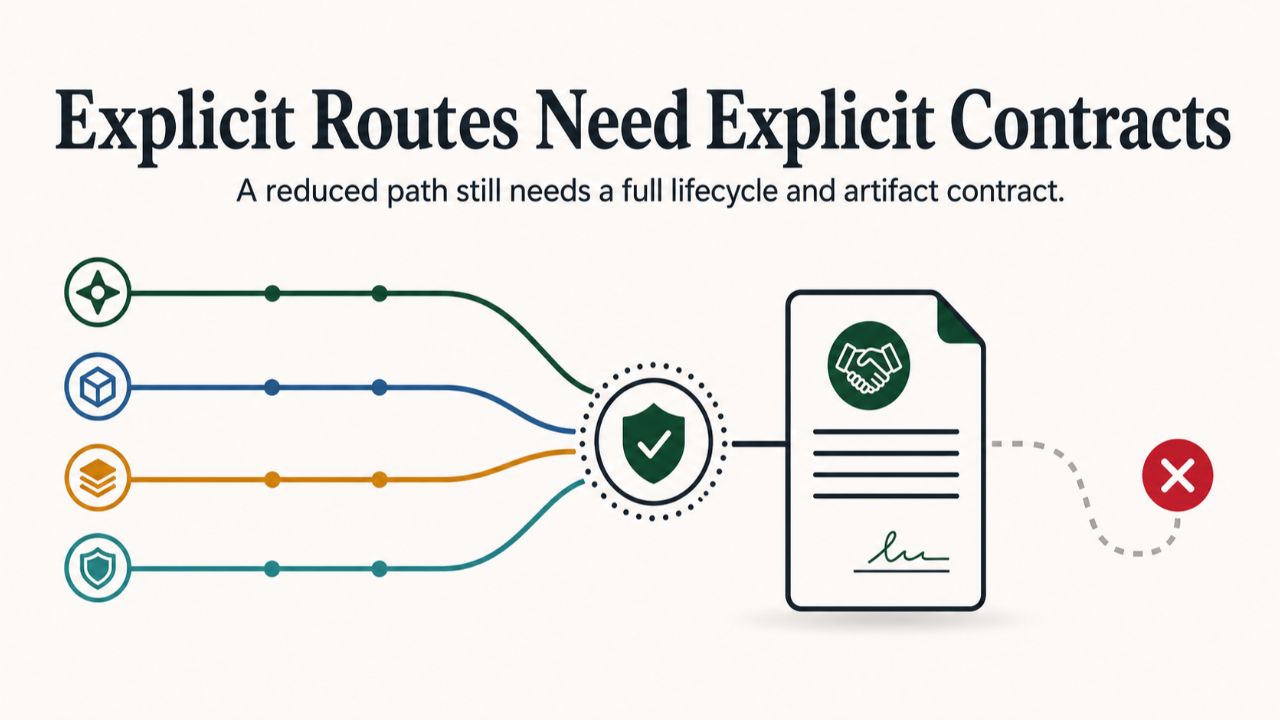
Shortcut routes can make governed workflows easier to operate, but they are risky when the route name hides which stages, audits, and artifacts actually exist. A reduced path still needs a complete contract.
Opening
Shortcut paths are useful until they become ambiguous.
In a governed workflow, a ...
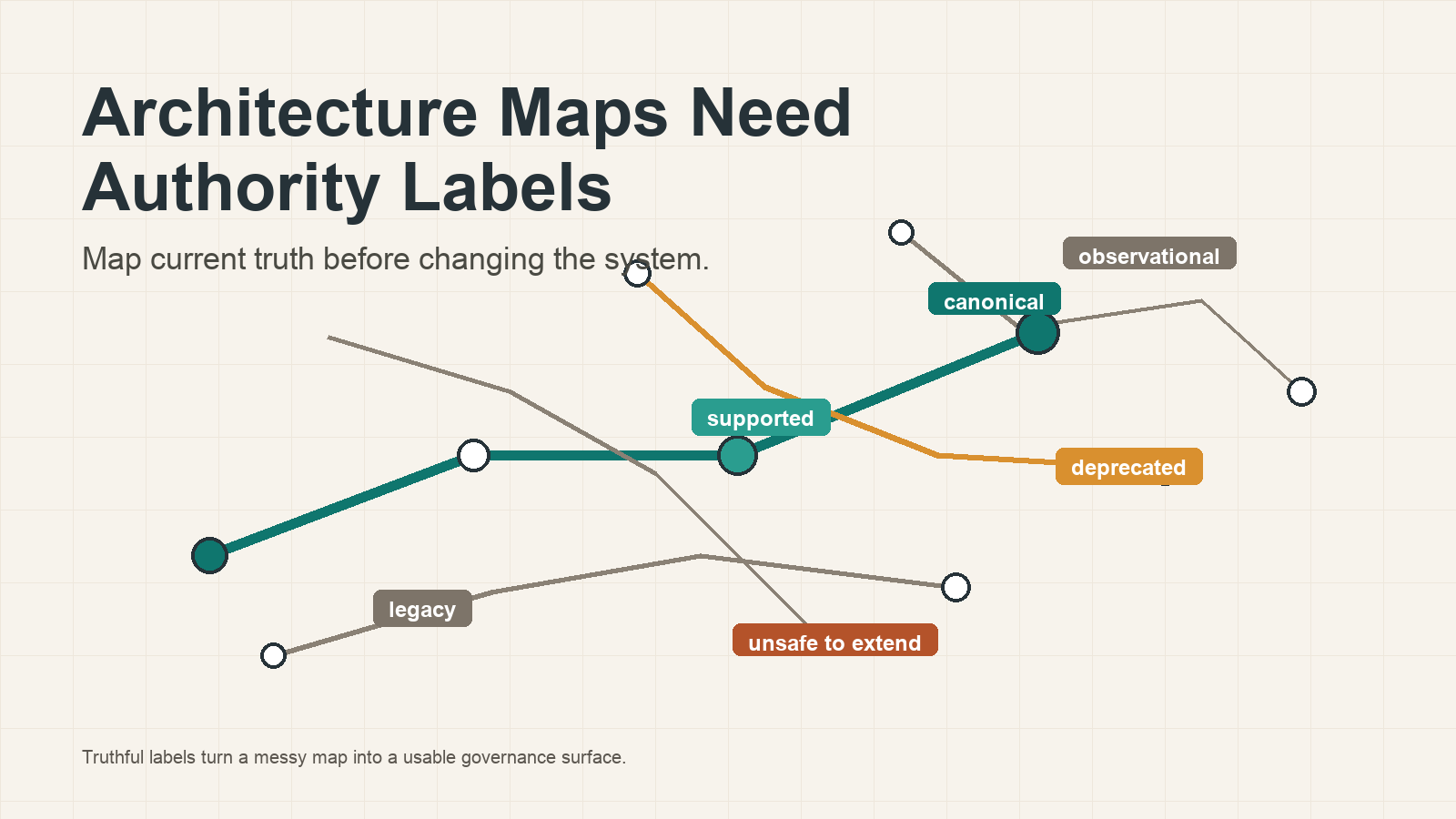
A system map is only useful when it tells future workers which paths are authoritative, supported, legacy, deprecated, observational, or unsafe to extend.
The Surface Problem
The surface problem looked like missing documentation.
There were several command paths, scaffolding paths, wrappers, and ...
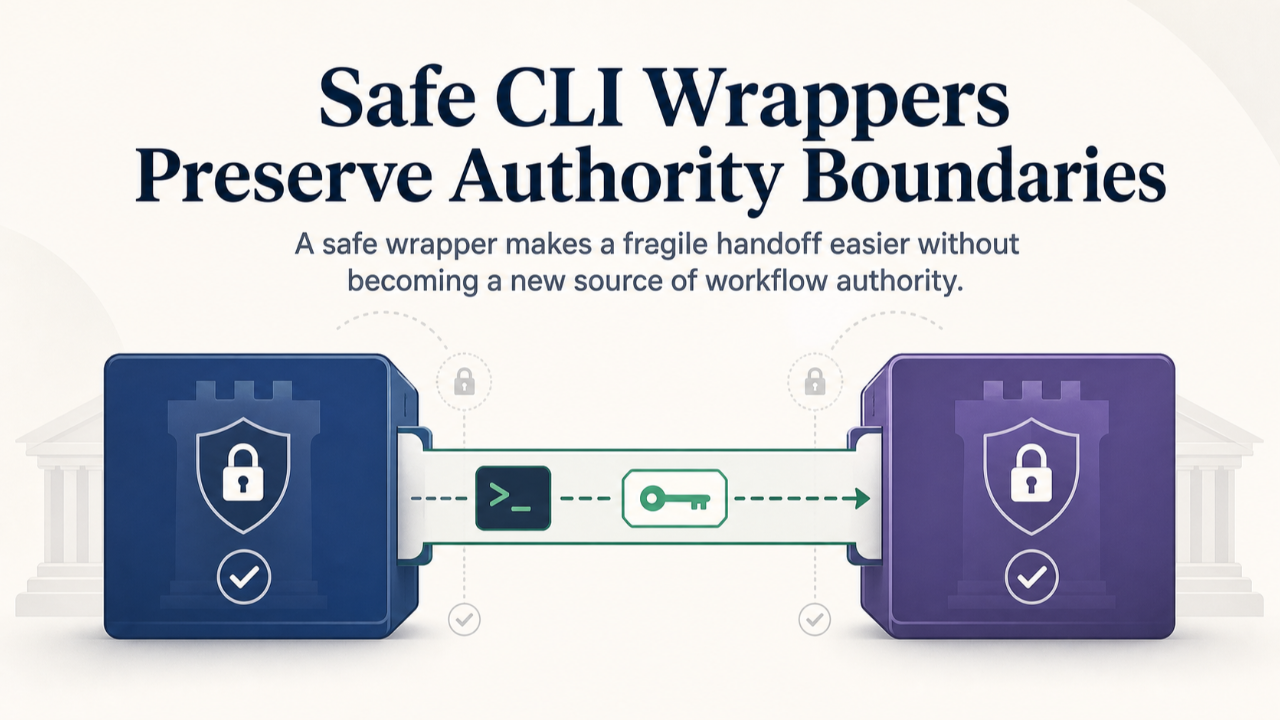
A wrapper command should make the right workflow path easier to run without becoming a second source of lifecycle truth. The safer pattern is to compose existing authority surfaces, capture explicit handoff signals, validate them, and stop at the next legitimate boundary.
Opening
Convenience code ...
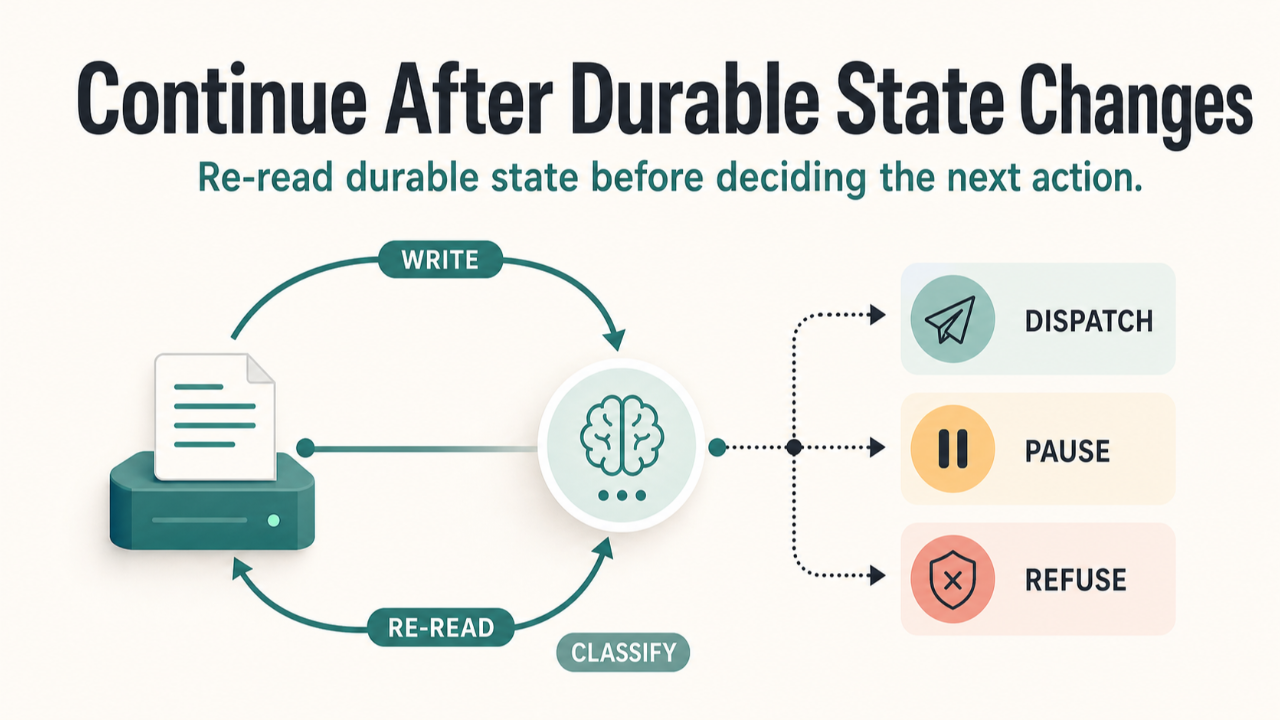
When an automated workflow writes new durable state, the next step should usually be to re-read that state and let the normal classifier decide what is legal now. Direct shortcuts are tempting, especially when the code change looks small. They also tend to bypass the very contract that makes the wor...
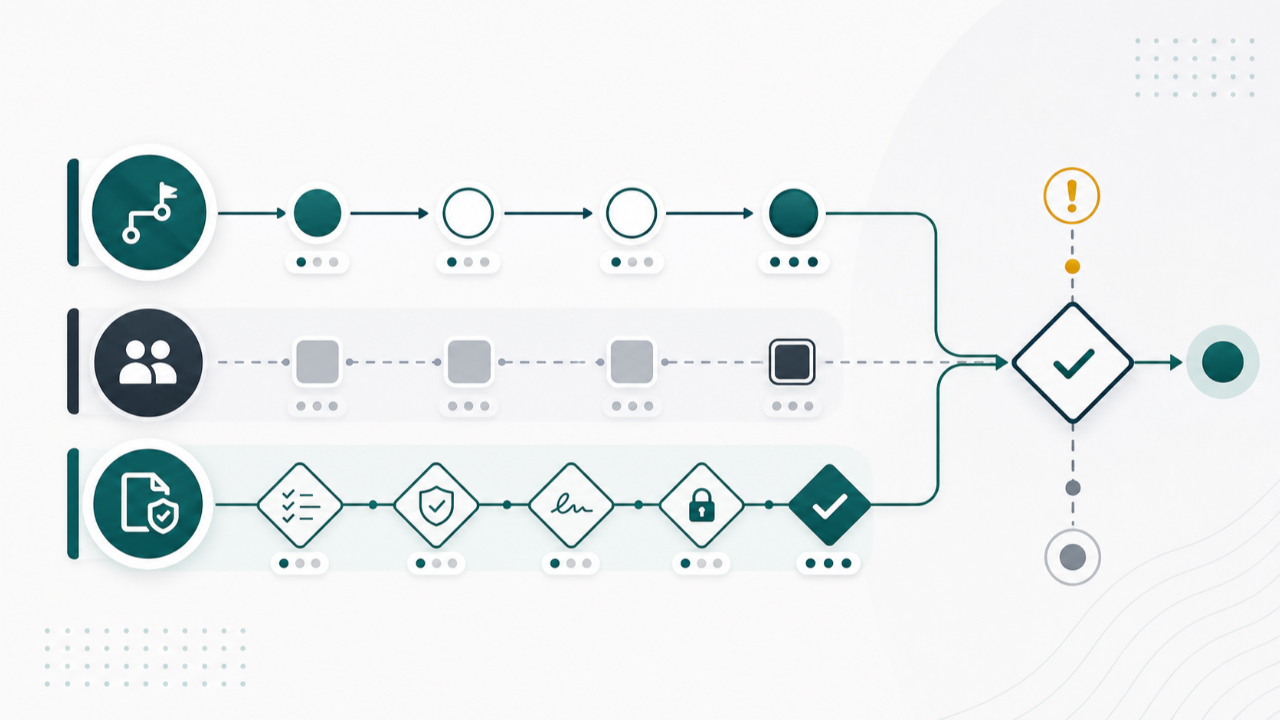
Governed workflows often carry several kinds of meaning at once: lifecycle stage, role, route posture, approval state, and execution capability. When those meanings are collapsed into one broad label, a workflow can apply the right control at the wrong time.
The safer pattern is to derive authority...
